The actual rate of $7.50 is computed by dividing the total actual cost of labor by the actual hours ($217,500 divided by 29,000 hours). Jerry (president and owner), Tom (sales manager), Lynn(production manager), and Michelle (treasurer and controller) wereat the meeting described at the opening of this chapter. Michellewas asked to find out why direct labor and direct materials costswere higher than budgeted, even after factoring in the 5 percentincrease in sales over the initial budget. Lynn was surprised tolearn that direct labor and direct materials costs were so high,particularly since actual materials used and actual direct laborhours worked were below budget. In this question, the Bright Company has experienced a favorable labor rate variance of $45 because it has paid a lower hourly rate ($5.40) than the standard hourly rate ($5.50). Direct Labor Yield Variance (DLYV) is a measure of the difference between actual and expected labor costs, based on the number of units produced or services provided.
Do you already work with a financial advisor?
This results in an unfavorable labor efficiency variance of $4,000, indicating that the company used 200 more hours than expected, incurring an additional $4,000 in labor costs. This results in a favorable labor rate variance of $800, indicating that the company saved $800 on labor costs due to lower wage rates than anticipated. Changes in the labor market, such as a shortage of skilled workers or new labor agreements, can lead to wage adjustments.
Importance of Understanding Labor Variances in Cost Management and Control
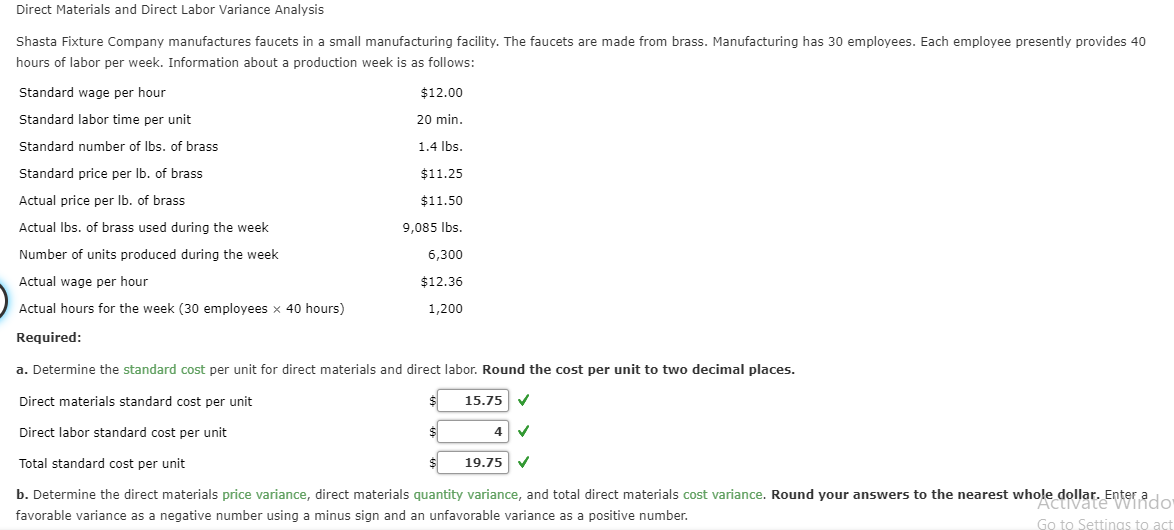
Labour Rate Variance is the difference between the standard cost and the actual cost paid for the actual number of hours. The other two variances that are generally computed for direct labor cost are the direct labor efficiency variance and direct labor yield variance. We actually paid $46,500 for labor for which we expected to pay $41,850.
Would you prefer to work with a financial professional remotely or in-person?
The total direct labor variance is also found by combining the direct labor rate variance and the direct labor time variance. By showing the total direct labor variance as the sum of the two components, management can better analyze the two variances and enhance decision-making. In this case, the actual rate per hour is $7.50, the standard rate per hour is $8.00, and the actual hour worked is 0.10 hours per box. This is a favorable outcome because the actual rate of pay was less than the standard rate of pay. As a result of this favorable outcome information, the company may consider continuing operations as they exist, or could change future budget projections to reflect higher profit margins, among other things. With either of these formulas, the actual rate per hour refers to the actual rate of pay for workers to create one unit of product.
Due to these reasons, managers need to be cautious in using this variance, particularly when the workers’ team is fixed in short run. In such situations, a better idea may be to dispense with direct labor efficiency variance – at least for the sake of workers’ motivation at factory floor. By implementing these best practices, companies can effectively manage labor variances, reduce costs, and improve productivity. Focusing on both labor rate and labor efficiency variances ensures a comprehensive approach to labor cost management, leading to better financial performance and operational success. Analyzing labor variances is critical for effective cost management and operational efficiency.
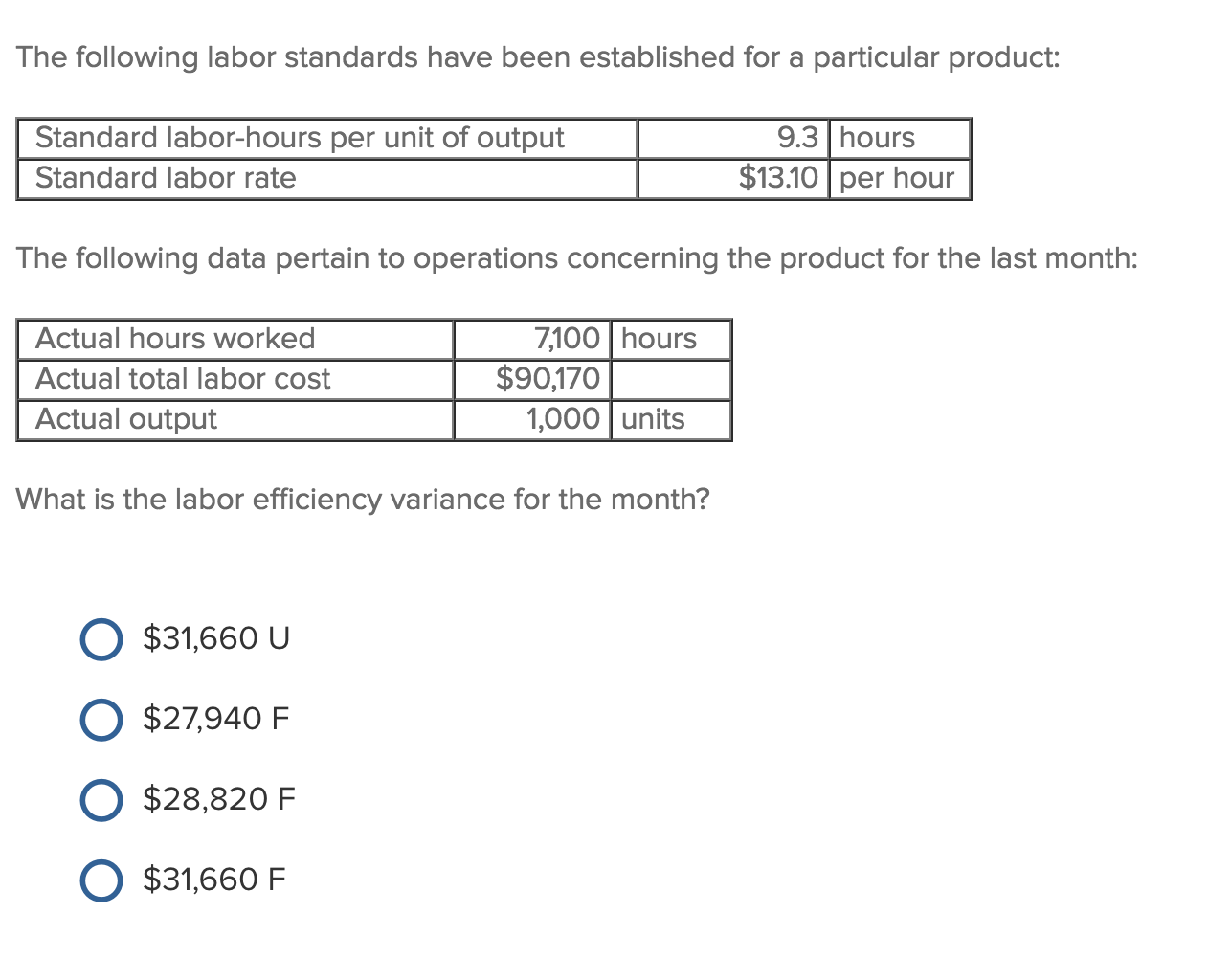
An example is when a highly paid worker performs a low-level task, which influences labor efficiency variance. Hence, variance arises due to the difference between actual time worked and the total hours that should have been worked. Organizations can use DLYV to identify cost-saving opportunities, measure the productivity of their labor force, and improve operational efficiency. Mary’s new hire isn’t doing as well as expected, but what if the opposite had happened?
The standard rate per hour is the expected rate of pay for workers to create one unit of product. The actual hours worked are the actual number of hours worked to create one unit of product. If there is no difference between the standard rate and the actual rate, the outcome will be zero, and no variance exists.
This proactive approach not only helps in managing labor costs more effectively but also contributes to better budgeting, forecasting, and strategic decision-making. Ultimately, understanding and managing labor variances are essential for maintaining financial health and operational efficiency. ABC Company has an annual production budget of 120,000 units and an annual DL budget of $3,840,000. Four hours are needed to complete a finished product and the company has established a standard rate of $8 per hour.
However, a positive value of direct labor rate variance may not always be good. When low skilled workers are recruited at a lower wage rate, the direct labor rate variance will be favorable however, such workers will likely be inefficient and will generate a poor direct labor efficiency variance. Direct labor rate variance must be analyzed in combination with direct labor efficiency variance.
- To estimate how the combination of wages and hours affects total costs, compute the total direct labor variance.
- The net direct labor cost variance is still $1,550 (favorable), but this additional analysis shows how the time and rate differences contributed to the overall variance.
- The direct labor efficiency variance may be computed either in hours or in dollars.
- He represents clients before the IRS and state taxing authorities concerning audits, tax controversies, and offers in compromise.
For Jerry’s Ice Cream, the standard allows for 0.10labor hours per unit of production. Thus the 21,000 standard hours(SH) is 0.10 hours per unit × 210,000 units produced. Doctors, for example, have a time allotment for a physical exam and base their fee on the expected time. Insurance companies pay doctors according to a set schedule, so they set the labor standard. If the exam takes longer than expected, the doctor is not compensated for that extra time. Doctors know the standard and try to schedule accordingly so a variance does not exist.
Review this figure carefully before moving on to thenext section where these calculations are explained in detail. In this example, the Hitech company has an unfavorable labor rate variance of $90 because it has paid a higher hourly rate ($7.95) than the standard hourly rate ($7.80). By fostering a culture of continuous monitoring what is an audit everything about the 3 types of audits and improvement, businesses can achieve better control over labor costs, enhance overall productivity, and drive long-term financial success. Embracing these practices ensures that labor variance management becomes an integral part of the company’s operational strategy, contributing to its growth and profitability.